Victoria Laporta Carbonell Foundation
Forest stewarship in Parc Natural de la Serra de Mariola
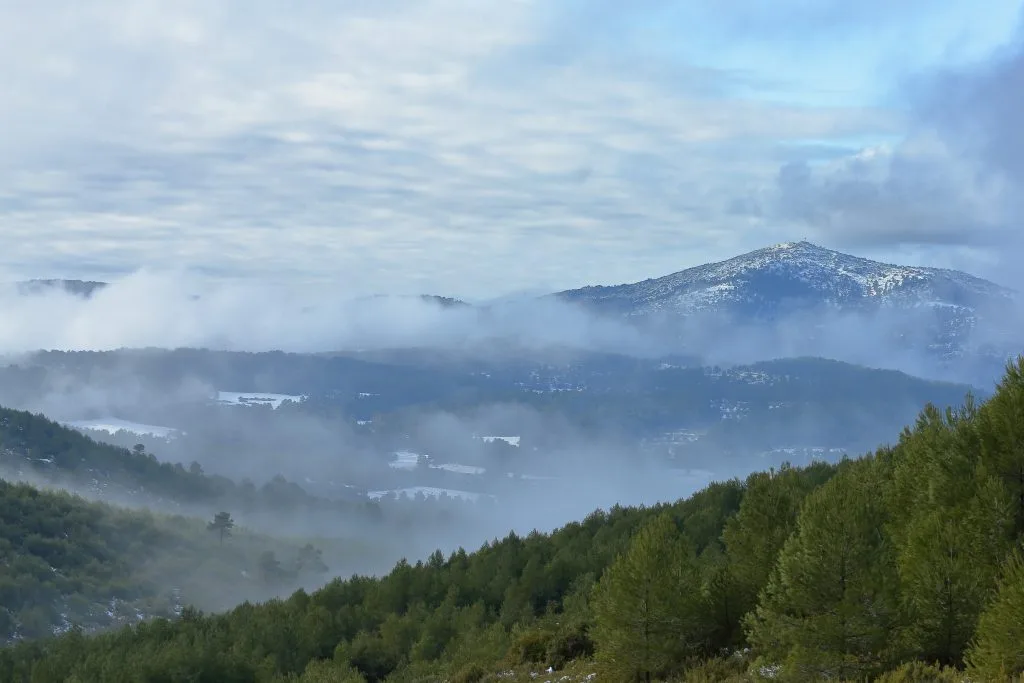
The Victoria Laporta Carbonell Foundation was established in 2003—nearly 23 years ago—born of Victoria’s deep affection for the Buixcarró Estate and her passion for nature, with the primary goal of ecological restoration. It is a diverse 650-hectare forest estate located in the Serra de Mariola Natural Park; the land had suffered environmental degradation, initially due to the gradual abandonment of traditional land-use practices and later because of several forest fires.
Faced with this situation, our founder could think of no better way to try to restore this small corner of the planet than to create a foundation, donate the property to it, and provide steadfast financial support until her untimely passing in late 2011.
Our foundational objectives include nature and biodiversity conservation; the preservation of traditional land uses and ethnological heritage; environmental education; collaboration on research into natural processes, ecosystems, and species; and professional training—activities carried out not only on our own forest estate but also in the surrounding area (specifically the Serra de Mariola and Carrascal de la Font Roja Natural Parks).
Over the years, we have gained valuable insights. We consider research and understanding of the environment of the project essential, if not possible, to seek expert advice, to ensure the success of any project or activity. We have also made mistakes when designing and undertaking projects; consequently, we recognize the need for a planification that guarantees economic viability or self-financing. While philanthropy, grants, and financial aid are useful, they should be viewed to complement or boost a project, never as the primary or sole source of funding.
Although it may sound like a cliché, projects involving various entities, public authorities, perspectives, and fields of action tend to be more complex, yet they are far more comprehensive, successful, and viable in the long run. At the Foundation, we always strive to work in coordination with local authorities, other organizations, and companies that share similar or overlapping goals—adopting a networked approach.
We are a modest organization, and our work would be impossible without the—almost always altruistic—support of many collaborators and friends, including conservationists, researchers, environmental educators, beekeepers, and others.
Beyond these factors, dedication, passion, and motivation do the rest. We are very proud of the results we have achieved over the years:
- the improvement of over 200 hectares of regenerating forest areas, resulting in viable young forests and healthy mature forests;
- a better understanding of our ecosystems, monitoring their evolution and the confirmed increase in overall biodiversity (using mammals, birds, amphibians, and insects as indicator groups);
- more than 11,000 people have visited Buixcarró since 2013: 6,000 schoolchildren, 2,000 participants in environmental education or nature interpretation activities, 900 photographers, and over 3,000 university and high school students;
- collaboration with 20 local companies and direct hiring of staff, generating annual employment;
- projects developed with research centers from the Universities of Alicante, Miguel Hernández, and the Basque Country, in collaboration with the Serra de Mariola Natural Park.
Work with research centers has included monitoring carnivorous mammal populations via camera trapping, conducting an ungulate census, creating a complete botanical inventory of the Buixcarró Estate and monitoring its various environmental units, and studying—via camera trapping—how scavengers use supplementary feeding points; assessing the impact of climate change on wildlife and ecosystems within the Serres de Mariola and Carrascal de la Font Roja SPA/SCI (an ambitious project launched in 2022 that has yielded two outreach publications, an app, and several scientific articles); and studying the influence of bees on the abundance and diversity of pollinator colonies; …and an assessment of the mouflon’s impact on Mediterranean vegetation, along with a study on palatability by plant family.
We hope that our experience—including the challenges and surprises we have encountered and overcome, as well as the projects that have enabled us to meet our goals and positively transform how society and our local community view the environment—will serve as a source of help or support for other organizations.
Listen to the story in Spanish told by Vicent Ferri Vila, biologist and technical director of the Victoria Laporta Carbonell Foundation:
This video showcases some of the Victoria Laporta Carbonell Foundation’s key initiatives at the Buixcarró Estate: