
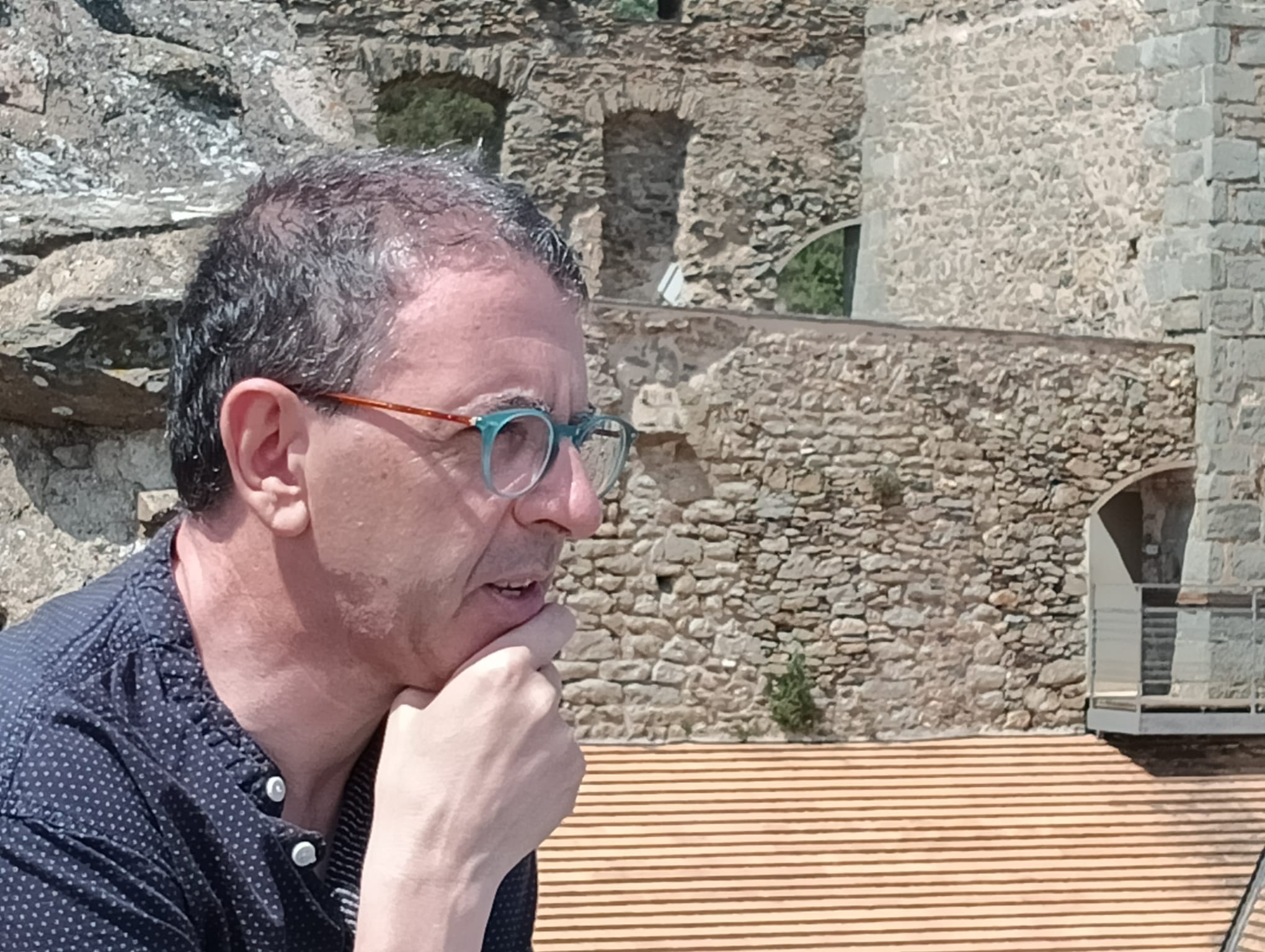
“Alliances are not an accessory, but a fundamental pillar, especially in a context that demands innovation and facing increasingly complex challenges”
Jordi Pietx (Independent consultant in socio-environmental network innovation)
The Land Stewardship Platform, within the LIFE Sterwarship project, has proposed a Strategy for 2023-2027 to promote land stewardship in Spain, defined through a participatory process. We spoke with Jordi Pietx, an independent consultant insocio–environmental network innovation. He emphasizes the importance of alliances and networks, such as the new virtual meeting platform “La Plaza de la Custodia” (Land Stewardship Square, English version is showed clicking in the leftt down corner), and of innovative methodologies in land stewardship to address increasingly complex challenges.
The Land Stewardship Platform’s Strategy is a roadmap developed through a participatory process. How can we fully appreciate its relevance to the land stewardship movement?
One of the most noteworthy elements of this strategy is undoubtedly the participatory process that enabled its development in 2022. This is complemented by a particularly relevant expert consultation, conducted both through national focus groups with the participation of diverse groups, and through strategic international contacts, all of which are reflected in a map included within the strategy itself.
Furthermore, it not only promotes land stewardship but primarily seeks to foster significant progress, a truly transformative change in the role that stewardship can play in the conservation and restoration of nature.
The strategy is structured around seven objectives, all of them relevant, although I would highlight three. First, innovation: to move forward and generate real change, innovation is essential, and the strategy outlines several approaches to this. Second, international partnerships and exchange, especially in a global context marked by major challenges for biodiversity, but also by an increasingly fluid dialogue through international networks and platforms. There are countries with invaluable experiences from which it is crucial to learn and with which it is advisable to connect.
Finally, I would highlight the evaluation and measurement of impact. The strategy incorporates a specific objective aimed at assessing the results achieved, which is key to understanding the true relevance of the actions undertaken and their effective contribution to nature conservation.
Why is it important to promote alliances for the land stewardship movement?
I would explain this first through an example. The strategy includes a quote from Candice Stevens, a South African lawyer and director of the Sustainable Finance Coalition for Nature in South Africa, who was one of the main drivers of tax incentives for land stewardship in that country.
She emphasizes the value of collective action and social capital as key factors in explaining the progress achieved in South Africa in this area. This example clearly illustrates that alliances are not an accessory, but a fundamental pillar, especially in a context that demands innovation and facing increasingly complex challenges.
How has the generation of alliances within the field of land stewardship evolved?
When land stewardship began to develop in Catalonia and throughout Spain in the early 2000s, it drew inspiration from international experiences. Countries like the United States, Canada, the Latin American private conservation network, and Central European countries such as the Czech Republic had already developed stewardship networks based on collaborative work and alliances among diverse stakeholders.
In Spain, the Catalan Land Stewardship Network (Xarxa de Custòdia del Territori de Cataluña) was the starting point, followed by the creation of networks in various autonomous communities, which are now perhaps more closely grouped under the umbrella of the Forum of Land Stewardship Networks and Entities. In some parts of Spain, it would be beneficial for these networks to regain the capacity they once had, but the movement continues in this network format.
One point I would like to make here is regarding the figure of 268 entities currently listed in the latest inventory of the Land Stewardship Platform. Is this figure too high? Could the movement gain more impact through partnership models that allow initiatives to scale up in terms of hectares, species, and habitats, while maintaining local autonomy?
It’s important that the scale of these initiatives can be increased. I believe this reflection is necessary to consider how to improve the land stewardship community in Spain and increase its capacity for real impact.
What factors are key to fostering alliances in stewardship initiatives?
The first factor is conviction. It’s essential that the organizations and stakeholders involved believe in the value of alliances and the power of collaboration, and that they develop these cross-cutting relationships.
From my point of view, alliances must always be based on three pillars: the public, social, and private sectors. Public-social-private partnerships are undoubtedly the way forward. Stewardship organizations and networks should promote them, but it is also important to involve other key stakeholders.
The strategy itself broadens this perspective to include different areas of public administration, not only the Ministry for Ecological Transition and the Demographic Challenge or the Biodiversity Foundation, but also regional and local governments, and raises the need to forge alliances at different territorial levels.
Specifically, why is it important for the land stewardship movement to create alliances with the private sector?
Recent European policies offer very clear examples of the growing demand for private sector involvement in nature conservation. The approval of the Nature Restoration Regulation and the European Commission‘s roadmap towards nature credits are two clear examples of this trend, consistent with the European Biodiversity Strategy 2030.
These regulatory frameworks emphasize the need for much broader participation from the private sector—business, financial, and even individual—to recognize nature as an essential natural capital for economic activity and the viability of our societies. The Land Stewardship Platform Strategy incorporates these elements and includes them as key aspects to be developed.
The strategy envisions the creation of a space for participation and dialogue. What is your assessment of the new online tool, “La Plaza de la Custodia“?
I’ve had the opportunity to learn about “La Plaza de la Custodia,” and I think it’s a very interesting step forward. Furthermore, it has parallels with international initiatives such as the Landcare Australia, which has a similar platform with various channels for participation.
“La Plaza” can be understood as a natural evolution of the old mail list of land sterwardship, created practically at the Platform’s inception almost 20 years ago, which was a very intense space for dialogue and technical exchange. My impression is that there is currently a certain distance between those more advanced and innovative entities, which work on a larger and even international scale, and the more grassroots entities, which are just taking their first steps. I believe that “La Plaza” can play a key role in rebuilding the collective, in reflecting on issues such as the optimal number of entities in the custodian movement in Spain, and in generating a higher-quality debate that involves both the more advanced and grassroots entities.
It can also be an ideal space for conducting a participatory evaluation of the Strategy and exploring how different stakeholders can join in its development and contribute to achieving its objectives, which are significant and complex to attain.
How do you assess the LIFE Sterwardship project as a tool for implementing the Strategy?
I participated in the development of the LIFE Sterwardship project proposal, which allowed me to understand it in depth from its inception. Although I haven’t been actively involved in its implementation, I have followed it with interest.
I would certainly highlight the generosity of the Biodiversity Foundation in leading this project, providing resources to the land stewardship community and its consolidation as a key conservation tool. Significant results are sure to be achieved, but at the same time, it’s also important to keep in mind that the Platform and its strategy have a long-term vision, with objectives projected towards 2030 and beyond.
Among the project’s lines of work, I would point to innovation, for example, the so-called “Innovation Lighthouses,” which are very promising, and we must ensure that the proposals they generate are replicable and scalable. I would also emphasize the capacity building initiatives for the community at all levels, from established organizations to grassroots ones, and the registration of land stewardship agreements.
And finally, I believe that the LIFE Sterwardship project itself constitutes a very interesting example of the connection between the preparation of the Platform’s long-term strategy and a concrete project that implements and gives it impetus. I think it is an experience that deserves to be analyzed and replicated in future processes, both within land stewardship and in other areas of nature and environmental conservation.
Watch the interview video here: