

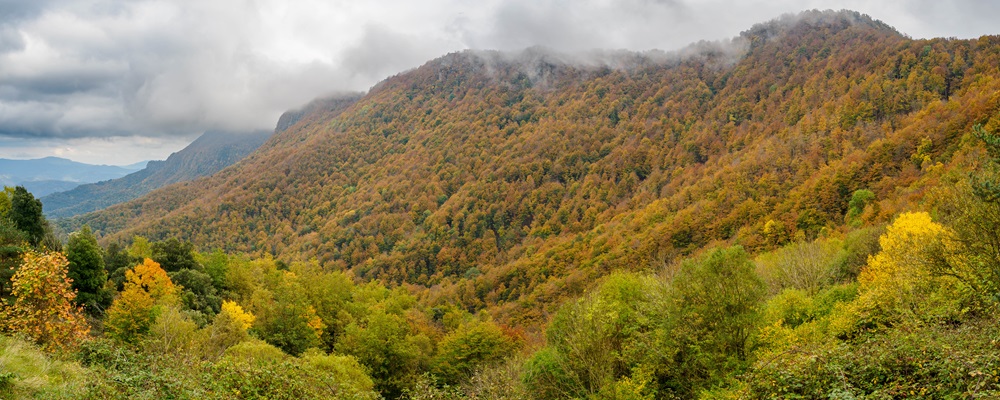
The second sectoral meeting for the development of a policy plan to promote land stewardship brings together 28 organisations from the forestry sector
Representatives from 28 organisations, including regional and national administrations, land stewardship entities, forestry and oak woodland (dehesa) organisations, universities, landowners' associations, cooperatives, companies and environmental foundations, took part in the sectoral meeting dedicated to analysing the current situation and challenges of land stewardship in forest ecosystems. Held within the framework of the LIFE Stewardship project, the meeting was the second in a series of workshops aimed at developing a plan to integrate land stewardship into public policies. The first meeting, which took place on 30 September, focused on river ecosystems. In the weeks to come, further meetings dedicated to the agricultural and urban sectors, will be held.
The aim of this workshop was to identify governance gaps, analyse successful experiences and propose measures to facilitate the integration of land stewardship into the sustainable planning and management of Spain’s woodlands and forests.
Spanish forests cover over 55% of the national territory and play a key role in climate change mitigation, providing ecosystem services and supporting rural development. The Spanish Forest Plan 2022–2032 and the Spanish Forest Strategy Horizon 2050 explicitly recognise land stewardship as a strategic tool for public–private and social cooperation, highlighting its potential to promote shared responsibility between administrations and landowners, mobilise private funding and support mechanisms such as patronage, payments for ecosystem services or carbon markets.
According to the 7th Inventory of Land Stewardship Initiatives (2023), forestry is the predominant land use among stewardship agreements (35% of all inventoried agreements), with 1,602 strictly forestry agreements covering 262,062 ha and 180 dehesa agreements, covering191,076 ha. The territorial distribution varies: Catalonia and the Basque Country have the highest number of agreements, while Extremadura, Andalusia and the Principality of Asturias have the largest surface area. This extent and diversity reflects the strong presence of private ownership and a wide range of collaborative models, involving actors from environmental organisations to rural cooperatives and small local authorities.
Showcased success stories
The workshop showcased consolidated experiences such as those provided by thethe Lurgaia Foundation, which manages more than 350 hectares in the Basque Country through voluntary agreements to restore native forests, and the one from Selvans Association, which protects more than 5,000 hectares of unique forests in Catalonia through stewardship agreements and economic compensation mechanisms. Both initiatives have demonstrated the potential of land stewardship to foster long-lasting partnerships, restore ecosystems, and generate social benefits.
Participants then worked in groups to identify challenges and opportunities for strengthening forest stewardship through a participatory approach. Key aspects highlighted included the need to reinforce collaborative governance, improve trust between administrations and landowners, establish stable financial mechanisms to ensure the continuity of agreements, and promote the professionalisation of stewardship entities. The importance of developing common indicators and integrating land stewardship more explicitly into regional forest planning — including management and planning tools, connectivity strategies and ecological restoration — was also emphasised, in line with the future European Nature Restoration Law.
Overall, participants agreed that the consolidation of forest stewardship requires strengthening its operational recognition within regional regulations, implementing financial instruments that reward ecosystem service provision, and achieving greater integration into national and European restoration and ecological connectivity policies.
LIFE Stewardship
The overall aim of the LIFE Stewardship project is to use land stewardship-based approaches to boost collaboration involving public and private entities as well as civil society for nature conservation and restoration in Spain, in the framework of the Europe Biodiversity Strategy 2030 and international agreements.
The project is coordinated by the Biodiversity Foundation of the Spanish Ministry of Ecological Transition and the Demographic Challenge, with the participation of Eurosite, the Forum of Land Stewardship Networks and Entities (FRECT), Global Nature Foundation (FGN), Fernando González Bernáldez/ Europarc-Spain Foundation, SEO/BirdLife and Nature Conservation Network (XCN) as partners. It has the financial contribution of the LIFE Programme of the European Union.