

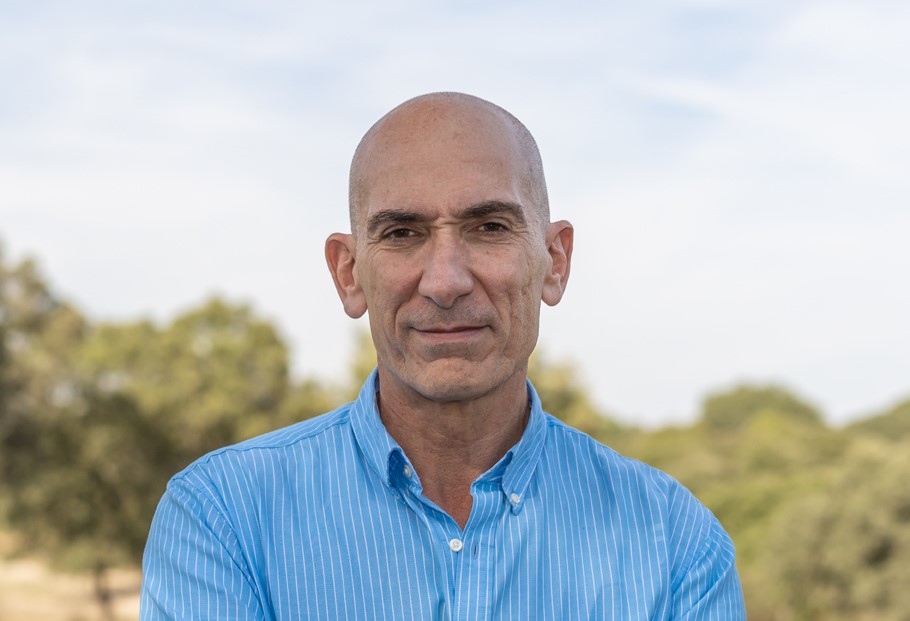
“It is essential to seek financial tools that involve the private sector in investing in conservation”
Eduardo de Miguel (Fundación Global Nature)
The conservation of biodiversity faces a significant financing challenge that cannot be addressed solely with public funds. As part of the LIFE Stewardship project, Fundación Global Nature is working to identify and evaluate innovative financial instruments that engage not only public administrations but also the private sector and civil society. We spoke with Eduardo de Miguel, Managing Director of the foundation, about the role of territorial stewardship, opportunities for strategic sectors in Spain, and the financial instruments that can make long-term conservation viable.
The Global Nature Foundation is a partner in the LIFE Stewardship project and is specifically carrying out a series of actions aimed at identifying and evaluating innovative financial instruments for nature conservation through territorial stewardship. Why are these types of innovative financing tools needed?
Within the current strategic framework for biodiversity conservation—supported by the EU Nature Restoration Law and the UN Global Biodiversity Framework—it is estimated that nearly €200 billion will need to be mobilized for conservation programs by 2030. For the European Union alone, this means an annual average of €19–20 billion.
Clearly, these figures cannot be achieved through public budgets alone, especially given the EU’s current budgetary context, where new priorities such as defense and economic growth are emerging. Therefore, it is essential to find tools that engage the private sector, incentivize resource mobilization, and foster three-way collaboration among the public sector, private sector, and civil society.
Why is territorial stewardship suitable for channeling investment into nature conservation and restoration?
Territorial stewardship is fundamental because it involves a public-private conservation model that directly engages landowners. In Spain, most biodiversity is found on private land, so working with landowners through these tools—and through collaborative programs that facilitate their involvement in conservation—is crucial.
What exactly do we mean by “innovative financing” in conservation? What tools are we talking about?
Often, what we call innovative financing isn’t entirely new. These are models that have already been tested in other countries or even in Spain, though they may need better adaptation to our reality. We’re talking about everything from more traditional instruments—such as philanthropy, environmental patronage, and corporate social responsibility (CSR) grants—to more complex and emerging tools like green bonds and investment lines from insurers. The latter are developing conservation programs as part of their risk prevention strategies. In short, there’s a wide range of instruments we want to analyze, refine, and begin applying through pilot projects.
The private sector thus plays a crucial role in this new financing model. What benefits does it gain from participating in territorial stewardship initiatives?
First, there’s the implementation of ESG (Environmental, Social, and Governance) policies, which many companies are adopting, particularly to enhance their reputation. Today, reputational risk is key: if a company fails to act, it may be excluded from certain markets. In fact, some have lost entire markets due to environmental impact issues.
Additionally, there’s growing interest in protecting supply chains by working in the territories where raw materials are sourced. This is already part of corporate economic strategy. And we can’t overlook the risk companies face in accessing financial markets: more and more banks are demanding environmental criteria from companies seeking financing.
Finally, there’s the ethical aspect. Many companies allocate funds to these causes out of ethical conviction, even without publicizing it. Ultimately, companies are made up of people, and people have values. In many cases, it’s not just about image or market access but about genuine ethical responsibility.
A recent report analyzed the most suitable tools for financing stewardship initiatives. How were these tools identified and defined? What were the findings?
The first step was to track examples in Europe, Spain, and the English-speaking world, where these instruments are most developed and even applied at scale. From there, the tools were grouped by different approaches.
For instance, some instruments aim to generate direct income for conservation, such as selling biodiversity-certified products or charging for access to natural spaces with cultural, social, or environmental value. Another group includes voluntary payments, like crowdfunding or altruistic donations, including increasingly popular models such as solidarity rounding in purchases.
One of the most relevant groups is based on markets and payments for ecosystem services, which we are currently analyzing with special interest in Spain. This includes compensations for impacts from renewable energy projects, water footprint offsets, and biodiversity credits—though the latter still lack a globally established market and methodology, unlike carbon credits.
Insurance-driven initiatives also stand out. We’ve seen the impact of events like Storm Dana, which caused significant damage and high costs for insurers. Now, they are beginning to invest in risk prevention programs, such as wetland restoration to reduce flooding or sustainable forest management to minimize wildfires. Emerging models like green bonds and climate foundation platforms are also gaining traction. In summary, we analyzed the full range of instruments available in the current environmental market, including experiences outside Europe, such as in Australia or South Africa.
What are the next steps for the project? How can stewardship entities and companies participate?
As part of the action package coordinated by the Global Nature Foundation, we have planned nearly 10 workshops with companies and territorial stewardship entities to connect them around these financial instruments. These will be thematic workshops focused on topics like water footprint or biodiversity credits, as well as sector-specific ones, such as those targeting tourism or agri-food.
The goal is to facilitate a “match” between stewardship entities and companies to develop real, applied conservation projects. The aim isn’t to restore all of Spain’s or Europe’s biodiversity through this project but to create pilot examples—demonstration beacons of what can be achieved in the coming years. We aim to launch at least 25 pilot projects covering around 5,000 hectares.
Could you share an example, in Spain or Europe, where these innovative formulas are already working?
In Europe, there are long-standing examples, such as the Biodiversity Net Gain in the UK or habitat and biodiversity credit markets in Germany. Spain hasn’t advanced as far in this area yet. We’re working on biodiversity metrics, but there are currently about 60 different global methodologies, making it difficult to consolidate a single market.
Nevertheless, companies are interested in having metrics to apply these projects. At the Global Nature Foundation, we have experience in regenerative agriculture, such as projects with agri-food companies like Nestlé, where net biodiversity gain is measured. There are also water footprint compensation projects, with examples like Heineken or Microsoft, which invests in wetland restoration to offset the impact of its data centers.
Another important area is renewable energy. The deployment of photovoltaic and wind farms is causing significant landscape transformations, requiring compensatory measures. Many of these are being channeled through conservation entities, seeking not only to offset impacts but to generate a net positive impact. Additionally, there are already certified forest carbon credit projects, such as the Motor Verde project in Asturias.
What are the most promising opportunities for Spain, and what results does the Global Nature Foundation expect to achieve within the LIFE Stewardship framework?
To identify opportunities, we first analyze Spain’s most dynamic economic sectors. The agri-food and tourism sectors clearly stand out. Spain is Europe’s leading agri-food exporter and one of the world’s top tourist destinations, with around 100 million annual visitors.
Both sectors are highly concerned about their impacts on biodiversity and water resources, as well as associated reputational risks. The renewable energy sector, where Spain is also a European leader, joins them. The energy transition requires compensation models that go beyond zero impact to achieve a positive impact.
Furthermore, some autonomous communities are already incorporating stewardship entities as key players in implementing compensatory measures, as seen in Madrid and Castilla-La Mancha. Together, these three sectors present a clear opportunity for the business sector and civil society to work in a coordinated manner to implement these models.