
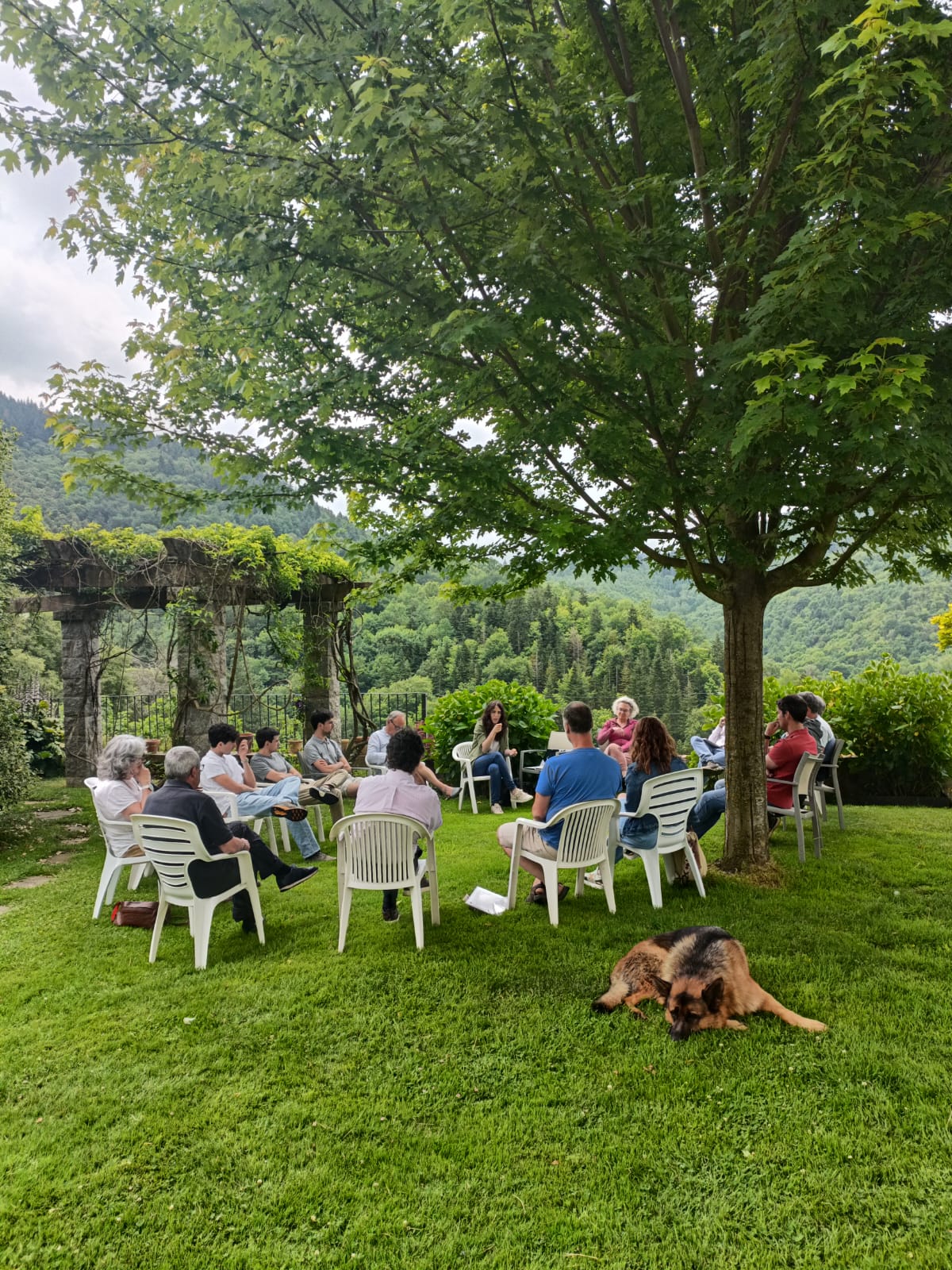
A new meeting to draft the proposed Public Policy Plan for Land Stewardship addresses the essential role of private property
The LIFE Custodia project held a meeting focused on the role of private property as a key agent in biodiversity conservation and sustainable land management. This meeting is part of the participatory process to develop a proposal for a Public Policy Plan for Land Stewardship, and follows on from previous meetings focused on urban, agricultural, forestry and river areas.
The meeting, organised by SEO/BirdLife, a partner in the project, brought together private landowners, representatives of stewardship organisations, public administrations, environmental organisations and experts. The objectives were, among others, to highlight the perspective of private property in relation to land stewardship, to identify the barriers that hinder its involvement and to explore opportunities and conditions necessary to strengthen trust between landowners and other agents involved in land stewardship.
HIGH PERCENTAGE OF AGREEMENTS ON PRIVATE LAND
According to the 7th Inventory of Land Stewardship Initiatives in Spain, 79% of agreements (3,641) are located on private land, showing a growing trend (73% in 2019 and 63% in 2017). The proportion of private land is also increasing, with 61% of the land under stewardship (48% in 2019). Land stewardship is therefore mainly linked to private conservation mechanisms.
However, its potential remains underutilised due to barriers such as initial mistrust, administrative complexity and the lack of clear incentives. During the meeting, the importance of recognising the diversity of landowners’ motivations and their contribution to conservation was highlighted.
ADVANTAGES AND OPPORTUNITIES OF LAND STEWARDSHIP FOR PROPERTY OWNERS
Among the advantages identified at the meeting was specialised technical support, which allows for optimised land management without the owner having to bear the entire technical burden alone. The revaluation of natural heritage arising from the improved ecological and functional status of the estates was also highlighted.
Land stewardship also acts as a bridge to new opportunities and incentives, facilitating better access to public aid, pilot projects and green financing mechanisms, as well as access to collaboration networks with administrations, universities and other agents in the territory. This intermediary role is key to integrating property into broader dynamics of innovation and sustainability.
SUCCESSFUL EXPERIENCES
One of the success stories presented was the experience of the Association of Property Owners for Nature Conservation in Catalonia, promoted by the Network for Nature Conservation (XCN). In the Catalan context, characterised by highly fragmented ownership and the predominance of small private estates, this initiative has succeeded in establishing a network of landowners committed to conservation, facilitating access to technical resources, tax incentives and institutional recognition. In this regard, the association acts as a collective actor, raising awareness of the role of private property and promoting public policies that support these practices.
Finally, the discussions shared throughout the meeting highlighted the need to move towards a more solid and coherent framework that will consolidate land stewardship from the perspective of property ownership. In this regard, four complementary pillars have been identified: a shared conceptual framework, an integrated and coherent regulatory framework, a stable system of financing and incentives, and an integrated system of instruments to ensure the sustainability of agreements.
LIFE STEWARDSHIP
The overall aim of the LIFE Stewardship project is to use land stewardship-based approaches to boost collaboration involving public and private entities as well as civil society for nature conservation and restoration in Spain, in the framework of the Europe Biodiversity Strategy 2030 and international agreements.
The project is coordinated by the Biodiversity Foundation of the Spanish Ministry of Ecological Transition and the Demographic Challenge, with the participation of Eurosite, the Forum of Land Stewardship Networks and Entities (FRECT), Global Nature Foundation (FGN), Fernando González Bernáldez/ Europarc-Spain Foundation, SEO/BirdLife and Nature Conservation Network (XCN) as partners. It has the financial contribution of the LIFE Programme of the European Union.